
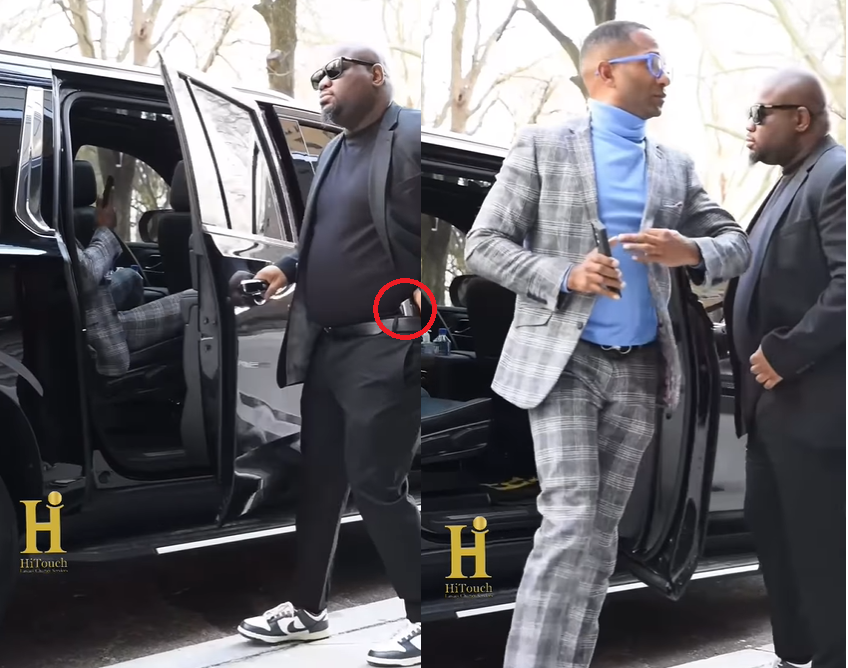
Luxury Charters for We – SEPTA and Ubers for Thee
Private inurement occurs when a tax-exempt nonprofit’s earnings or assets improperly benefit an insider, such as a founder, officer, or key employee, rather than serving the public interest.



Felicia D. Williams
Consultant, Marketing & Events
African-American Chamber of Commerce PA, NJ, DE
fharris@aachamber.org
HiTouch Enterprises
felicia.harris@hitouchinc.com
f.d.harris.inc@gmail.com
fharris@aachamber.org
msfeliciaharris@gmail.com
Of course, #TurtleneckTurner and David F. Harris recommend HiTouch.
David F. Harris is Felicia D. Williams daddy.
The same dharris@odaat.us?
Felicia D. Williams is ODAAT’s Event Planner and Communication Consultant.
Private inurement is a strict IRS rule that prohibits any part of a nonprofit organization’s net earnings from flowing to private individuals who have a personal and private interest in the organization, often referred to as “insiders” or “disqualified persons.”
This includes founders, board members, officers, key employees, major donors, and their immediate family members. The term “inure” means to benefit, so private inurement essentially means that insiders cannot treat the nonprofit’s resources as their personal assets.
Private benefit, private inurement, and self-dealing are defined by the Internal Revenue Service as unacceptable practices for nonprofit tax-exempt organizations. The IRS expects nonprofits to exist for the public good and not to be created or operated for the benefit, financial or otherwise, of a private individual.
NASCAR
Summer Fun Vacations and Weekends for Execs
Porchville for the Serfs
UAC spends $250,000 to teach how many interns to drive racecars? Five?
I bet the ole’ American Express charge cards are being hit hard with luxury hotel accommodations and ribeye/lobster dinners with executives getting what common folk see as “free vacations” to the races.

Urban Affairs Coalition needs to explain to the public how many of its executives have American Express credit cards, flaunting them in public, in their “personal name.” These people need to tip workers better because they talk.
When dealing with county or federally funded programs, expenses may be restricted from being charged to credit cards offering benefits like cash back.
This is often due to federal cost principles and grant agreements, which dictate what expenses are allowable under specific funding streams. Are the UAC executive AMEX cards offering rewards or cashback? The PA Charity Board and PA General Fund might like to know.
Private inurement describes the use of a nonprofit’s resources to benefit a specific individual within the nonprofit personally, rather than being used toward the organization’s stated mission. Sounds a lot like fraud, right? Well, it’s actually much more common than outright fraud, perhaps because it’s not quite as obvious or intentional. See: Click Here
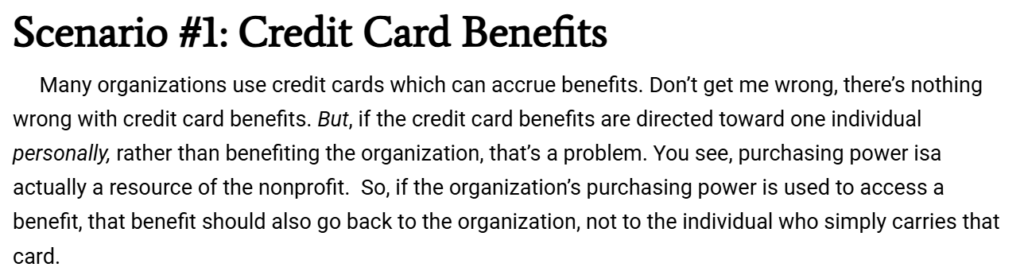
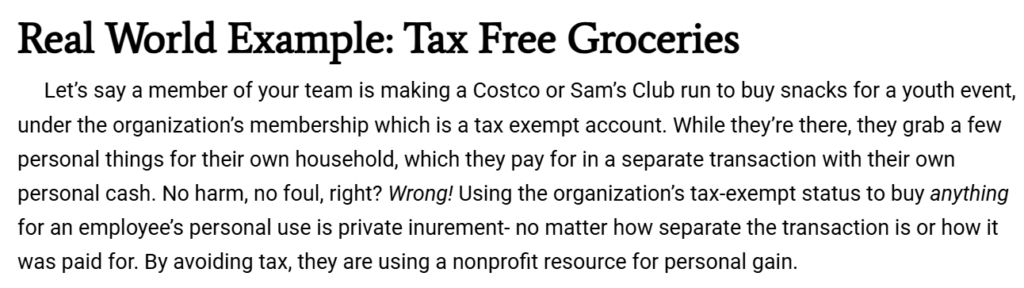
Why is UAC sometimes using AMEX to pay for parking and red-light tickets?
Is UAC being reimbursed by the employees for their infractions?
Why would any profit care if caught in an embezzlement scheme when the person who reports it is fired and nobody is held accountable?
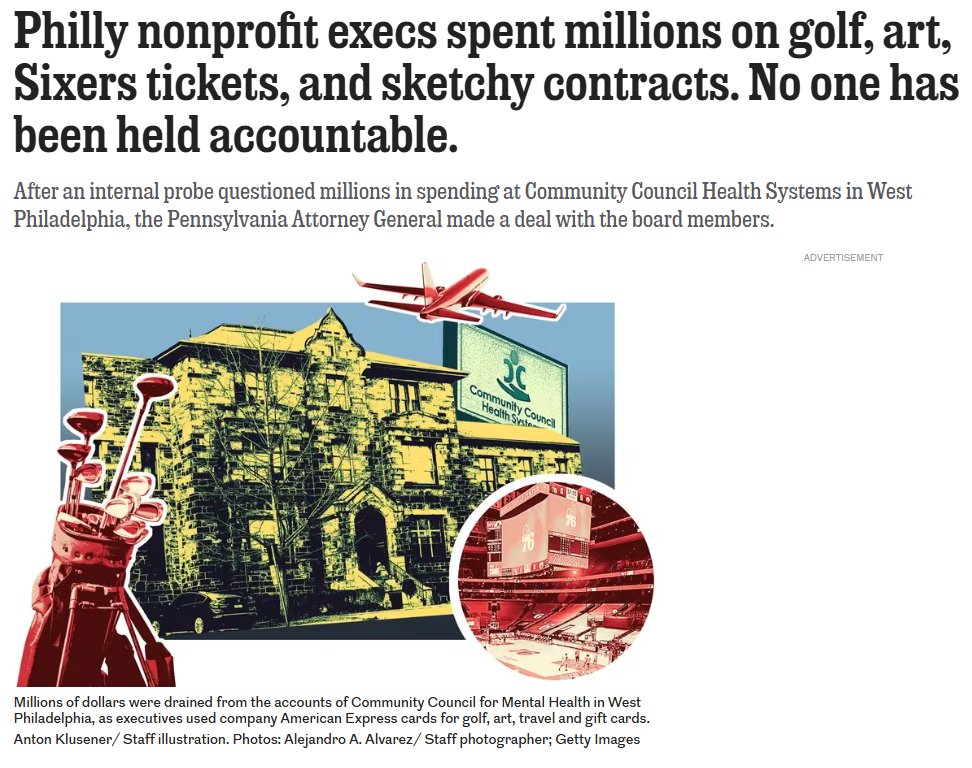
Community Council Health Systems has anchored West Philadelphia’s Mill Creek neighborhood for decades by providing mental health care and drug treatment to low-income adults and youths.
But behind the scenes, the 68-year-old, publicly funded nonprofit was systematically plundered by its top executives for years, according to an internal investigation.
Some $5 million was allegedly misappropriated — into questionable contracts awarded to a maintenance company owned by the nonprofit’s leaders, and extravagant purchases made with company credit cards for travel, art, golf, even $84,764 worth of 76ers tickets.
Executives of the $12 million nonprofit also created a real estate holding company and used it to quietly sell off a beloved community tennis center, built on donated public land, to a developer for more than $1.5 million.